
Our own mental health is suffering after months of uncertainty and change. It’s no surprise that many of our students are struggling, too
There is a growing need for mental health support for youth. From anxiety to depression, which can be compounded by issues like bullying, trauma, and lack of access to basic needs, 20 percent of children and adolescents will experience a mental health concern during their school years.
This year, that need is even more pressing. The pandemic has meant closed schools, financial insecurity, and a decrease in social connection, all things that uproot teens’ lives. A recent survey found that in 2020 the proportion of teens age 11 to 17 who searched for help with mental health was up 9 percent
At some point during an educator’s career. The classroom and the relationship a teacher has with these young people can be a powerful force in helping them to feel safe and important and to provide the one stable place in their lives. But, not all teachers know exactly what to do or how to do it in order to help support these students
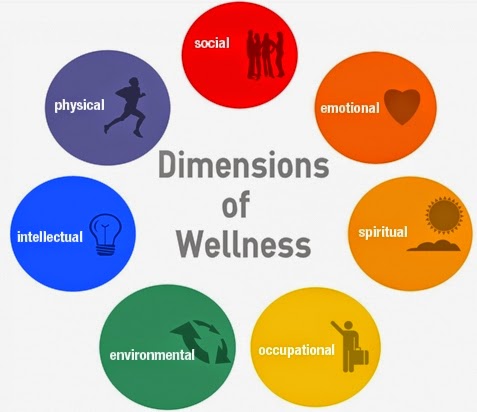
Like most kids, don’t want to be singled out, However, encourage teachers to understand that the lives of youth aren’t like most average students. Students are pulled in a million different directions, so it’s difficult extremely difficult for them to just jump into a new classroom and feel a part of it all
Teachers can make the classroom feel like an open environment. They can let the entire class know that’s it’s a safe place where students can come if they need to talk “It would go a long way to opening the discussion for those much-needed mental health check-in. There is a growing need for mental health support for youth. From anxiety to depression, which can be compounded by issues like bullying, trauma, and lack of access to basic needs, similar to the general population, 20 percent of children and adolescents will experience a mental health concern during their school years.
"Teachers are in an important position to support students, teens’ mental health,” . It can be as simple as helping students see the connection between their mental health and academics. Available for your students when they are in need or when you r free not just classroom talks.
Thoughts, behaviours, and emotions influence each other in positive and negative ways. Identify when they or a peer may need help for their mental health, how to get help and what to expect when seeking treatment. strategies to learn to turn a negative cycle into a positive one.The impact of stress, the influence the brain has on each person, and the impact our environment can have on our mental health. Balancing emotions, thoughts, and behaviours regardless of the severity, and explore choices that may help them reduce the severity of symptoms
Self-awareness is the ability to see yourself clearly and objectively through reflection and introspection.
While it may not be possible to attain total objectivity about oneself (that’s a debate that has continued to rage throughout the history of philosophy), there are certainly degrees of self-awareness. It exists on a spectrum.
Although everyone has a fundamental idea of what self-awareness is, we don’t know exactly where it comes from, what its precursors are, or why some of us seem to have more or less than others
Self-management is about preparing for the future, owning your present and taking care in what you do – as well as learning how you could do better next time. Self-management is a really important way to grow as a person, not just in the workplace. Babies are not responsible for anything they do Self-management can make a huge difference to your life. From managing your time to prioritising tasks, and even having a tidy desk being organised will help you improve your employability and also your life. An organised person will know what they need to do and when, where their pen is, and if it’s their turn to bring biscuits into the office.
The truth of the matter is that most of us aren’t relationship experts: we make mistakes, we do and say things we regret, and our relationships subsequently suffer. Now I’m not talking strictly about relationships with our significant others, but those with friends and family as well. In every case, there are expectations and standards that must be met in order to maintain those healthy and loving bonds. And though we sometimes waver, acknowledging and understanding these standards will help us maintain healthy relationships with those that mean the most. Here are eight keys to doing just that, according to mental health professionals Honesty/ ,Self-awareness, Understanding , Empathy, Support , Time, Open-mindedness, Shared experiences
Social Awareness is the ability to take the perspective of and empathize with others from diverse backgrounds and cultures; to understand social and ethical norms for behavior; and to recognize family, school, and community resources and supports.1 Social awareness is a crucial component of appropriate classroom behaviour, which contributes to an environment conducive to learning. Social awareness is also widely established as an important factor in workforce success. One recent employer survey conducted by the Partnership for 21st Century Skills demonstrates that four of the five most important skills for high school graduates entering the work force are linked to social awareness: professionalism, collaboration, communication, and social responsibility.2 Social consciousness is consciousness shared by individuals within a society. Social consciousness is linked to the collective self-awareness and experience of collectively shared social identity “We must resist thinking in siloed terms when it comes to social-emotional learning (SEL), academics, and equity. Rather, these elements of our work as educators and partners go hand in hand.
Social awareness may contribute to better behavior and achievement in school and increased engagement with community and school resources: Positive Classroom Climate: Students with strong social awareness can more easily adapt to their environment, empathize with the perspectives of others, and engage in fewer disruptive classroom behaviors. This, in turn, creates an environment where students can focus on learning
Students who demonstrate strong social awareness are able to engage in constructive communication with their peers and resolve conflicts when they arise. These students benefit from peer learning and know how to take advantage of social supports
4 Fewer Risky BehavioursStudents who are able to adapt to new environments, understand the needs and perspectives of others, and know where to get support when they need it are less prone to emotional distress and less likely to engage in risk behaviours, such as drug use and aggression, that interfere with school success.
Responsible decision making is defined by the Collaborative for Academic, Social, and Emotional Learning (CASEL) as “the ability to make constructive choices about personal behavior and social interactions based on ethical standards, safety concerns, and social norms.” Essentially, all aspects of a potential decision ..
What Skills are Associated with Responsible Decision Making?
In order for students to effectively make responsible decisions, they must develop competency with the following abilities:
Students must be able to accurately recognize when they have encountered a problem. Problems can range from difficulty meeting the expectations in a classroom, to choosing whether or not to complete homework, or even deciding to engage in unhealthy behavior, such as lying or using banned substances. It is important that students are able to appropriately acknowledge when they are faced with a problem. For some, recognizing that they are in a difficult situation can be challenging as a result of their language-based difficulties or social communication weaknesses
Once students have succeeded in identifying the problem, they must then learn to analyze the situation from a variety of angles, which includes identifying how and why the problem arose. To build this skill, students may benefit from educator guidance to fully understand their role in the developing situation.
After students have sufficiently identified, analyzed, and considered the problem, they then need to develop and practice methods for solving problemsThey need to identify possible options and explore the potential consequences of each option. Educators can play a role in guiding the practice and implementation of these methods. Individual students may even need to be creative in their solutions to fit their own profiles.
In addition to the natural or identified consequences of a decision, students must also consider any ethical or moral obligations they may feel or be held to. For instance, before a student chooses to look at someone else’s test, the student will need to consider the potential ethical and moral repercussions of cheating
Evaluating and reflecting on what happened is almost as important as the decision making process itself. When students take the time to evaluate how successfully they identified, analyzed, and solved a problem, they are more apt to engage in appropriate reflection on what went well and what could be improved. This reflection allows students to note any necessary changes and work to incorporate those in their next decision making opportunity.
Physical activity during your college days can have a big positive impact for the rest of a student’s life. When a student comes to a college after years at a school the student has a lot more freedom while choosing a physical activity. The student should make the best use of this freedom by opting for activities that are enjoyable and give a good work out at the same time.Aim for a level that you are comfortable with at the start Although it is great to give a fair amount of time and in that time to exert significantly, one should be comfortable with the level of physical activity one undertakes. The good part is even if you do only a small amount of physical activity each day you will start to see the benefits. Even just ten minutes a day of moderate to vigorous physical activity will make a difference. Try to reach a level that maximizes the benefits
As you will start to enjoy the small amount of physical activity you do each day you can increase it. The benefits will increase as well. Two and half hours of vigorous physical activity or five hours of moderate physical activity every week is a good target. You can spread the time over as many days as you want and even into more than one session per day. It is good though to keep the minimum session time at ten minutes. Have a safe game or workout
Remember though not all activities count as a workoutIf you are walking while shopping then that is not sufficiently intense to count as a workout. But if you walk briskly that will count. Low intensity activity will not normally cause you to sweat or breathe faster. Moderately intense workouts will start to make that happen. And if that is happening then the activity is fine. Some activities you can take up are walking, biking, swimming, dance classes, aerobics, various sports, work outs in the gym.
If you are using equipment make sure you know all the safety precautions that are necessary to take and follow them properly. You can also avoid injuries by stretching before you exercise. Simple stretches before and after playing your sport or your workout will help you stay active and pain free. Nutrition is important as well
Proper nutrition is key to getting the most from your work outs. Please do read the section on nutrition to know more.